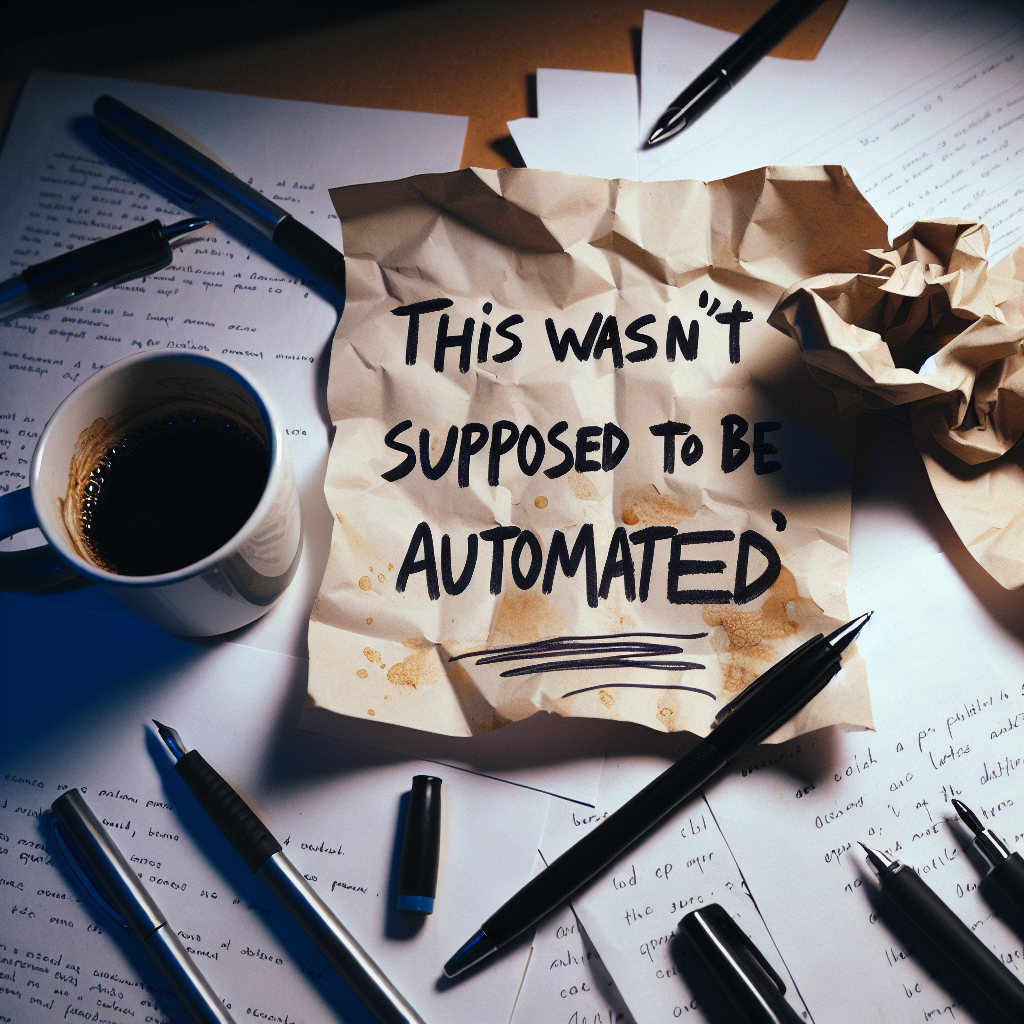
This wasn’t supposed to be automated

Did you know that over 60% of jobs could be automated by the early 2030s? This statistic from a McKinsey report highlights a growing trend in automation. Many tasks once thought to require human touch are now being handled by machines. But what happens when automation takes over areas that were never meant to be automated? This article explores the implications of automation in unexpected fields.
‘The Rise of Automation’
”Automation has transformed industries. It streamlines processes and cuts costs. Businesses embrace technology to boost efficiency. However, not all tasks should be automated. Some roles require human intuition and empathy. When we automate these tasks, we risk losing essential human elements.”
”Consider customer service. Many companies now use chatbots. These bots handle inquiries and complaints. They provide quick responses. Yet, they often lack the personal touch. Customers may feel frustrated when they cannot connect with a real person. This disconnect can harm brand loyalty and customer satisfaction.”
‘The Human Element’
”Humans excel in areas like creativity and emotional intelligence. These skills are hard to replicate with machines. For example, therapists and counselors rely on empathy. They understand complex emotions. A robot cannot provide the same level of support. Automation in mental health care could lead to inadequate treatment.”
”In education, teachers play a vital role. They inspire and motivate students. While online learning tools are helpful, they cannot replace the teacher-student relationship. Students need guidance and encouragement. Automation in education could hinder personal growth and development.”
‘Unexpected Consequences’
”When we automate tasks, we often overlook the consequences. For instance, in healthcare, robots assist in surgeries. They improve precision and reduce recovery times. However, they cannot replace the surgeon’s judgment. A machine may misinterpret a situation, leading to serious errors. Human oversight remains crucial in high-stakes environments.”
”Moreover, automation can lead to job displacement. Many workers fear losing their jobs to machines. According to a report by the World Economic Forum, 85 million jobs may be displaced by 2025. This shift can create economic instability. Workers need retraining and support to transition into new roles.”
‘Balancing Automation and Humanity’
”Finding the right balance is essential. Businesses should assess which tasks to automate. They must consider the impact on employees and customers. Here are some strategies to maintain this balance:”
– ”Identify tasks that require human skills.”
– ”Automate repetitive and mundane tasks.”
– ”Invest in employee training and development.”
– ”Encourage collaboration between humans and machines.”
– ”Gather feedback from employees and customers on automation efforts.”
”By following these strategies, companies can harness the benefits of automation while preserving the human touch. This approach fosters a positive work environment and enhances customer experiences.”
‘The Future of Work’
”As automation continues to evolve, the future of work will change. New roles will emerge, focusing on technology management and human interaction. Workers will need to adapt to these changes. Lifelong learning will become essential. Skills like critical thinking and creativity will be in high demand.”
”Companies must prioritize employee well-being. They should create a culture that values human contributions. This culture will help retain talent and improve job satisfaction. A happy workforce leads to better productivity and innovation.”
‘Case Studies: Automation Gone Wrong’
”Several companies have faced backlash for automating tasks too quickly. For example, in 2019, a major airline used automated systems for customer service. Passengers experienced long wait times and unresolved issues. The airline quickly reverted to human agents to restore customer trust.”
”Another example is the fast-food industry. Some chains introduced kiosks for ordering. While they reduced labor costs, customers missed the personal interaction with staff. Many patrons prefer a friendly face over a screen. This shift can impact customer loyalty and brand perception.”
‘Conclusion: Embracing Automation Wisely’
”Automation offers many benefits, but it comes with risks. Businesses must carefully consider which tasks to automate. They should prioritize human skills and emotional intelligence. By finding the right balance, companies can thrive in an automated world. The key is to embrace technology while valuing the human touch. This approach will lead to a more sustainable and successful future for both businesses and employees.”